 English




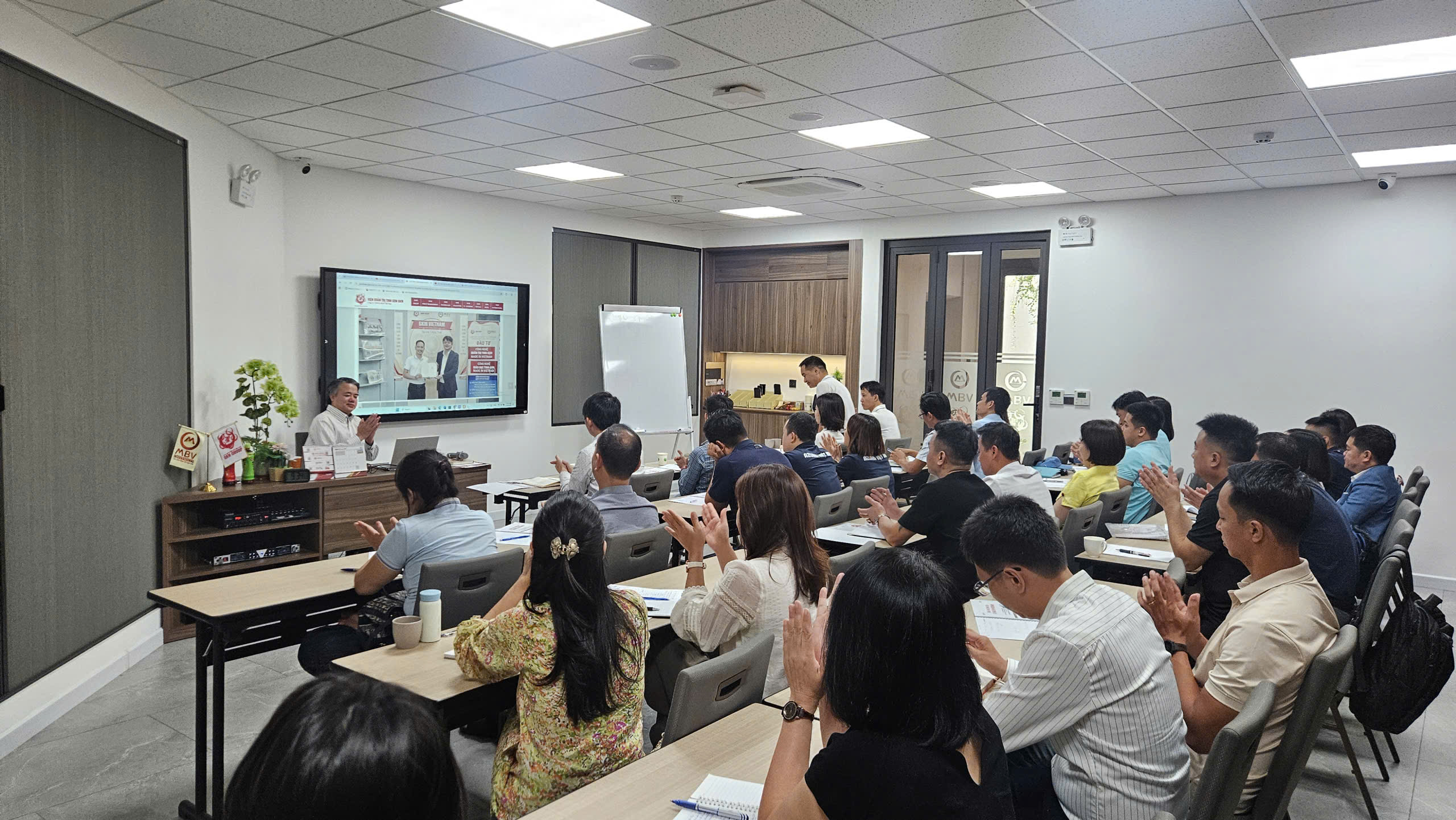
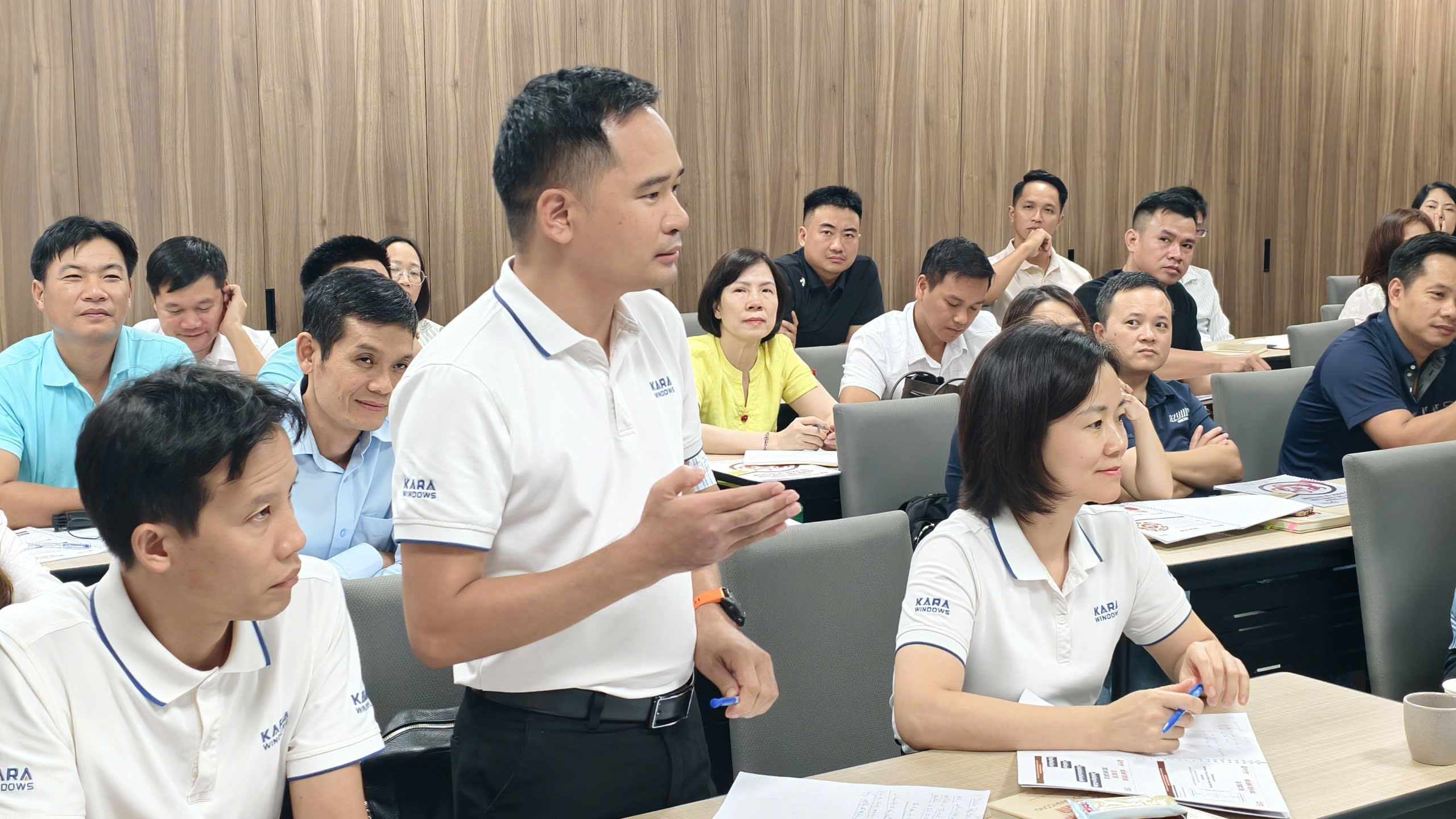
On October 9 and 10, 2026, the training programme “Lean Management 5S MADE IN VIETNAM,” jointly organised by GKM GROUP and MBV INTERNATIONAL, was successfully held at MBV International’s headquarters in Hanoi. Led by Assoc. Prof. Dr. Nguyễn Đăng Minh, Founder of Lean Management Technology Made in Vietnam (MIV), the programme went beyond the transfer of a set of tools for organising factory workspaces. At its core, it represented a fundamental transformation in management thinking.
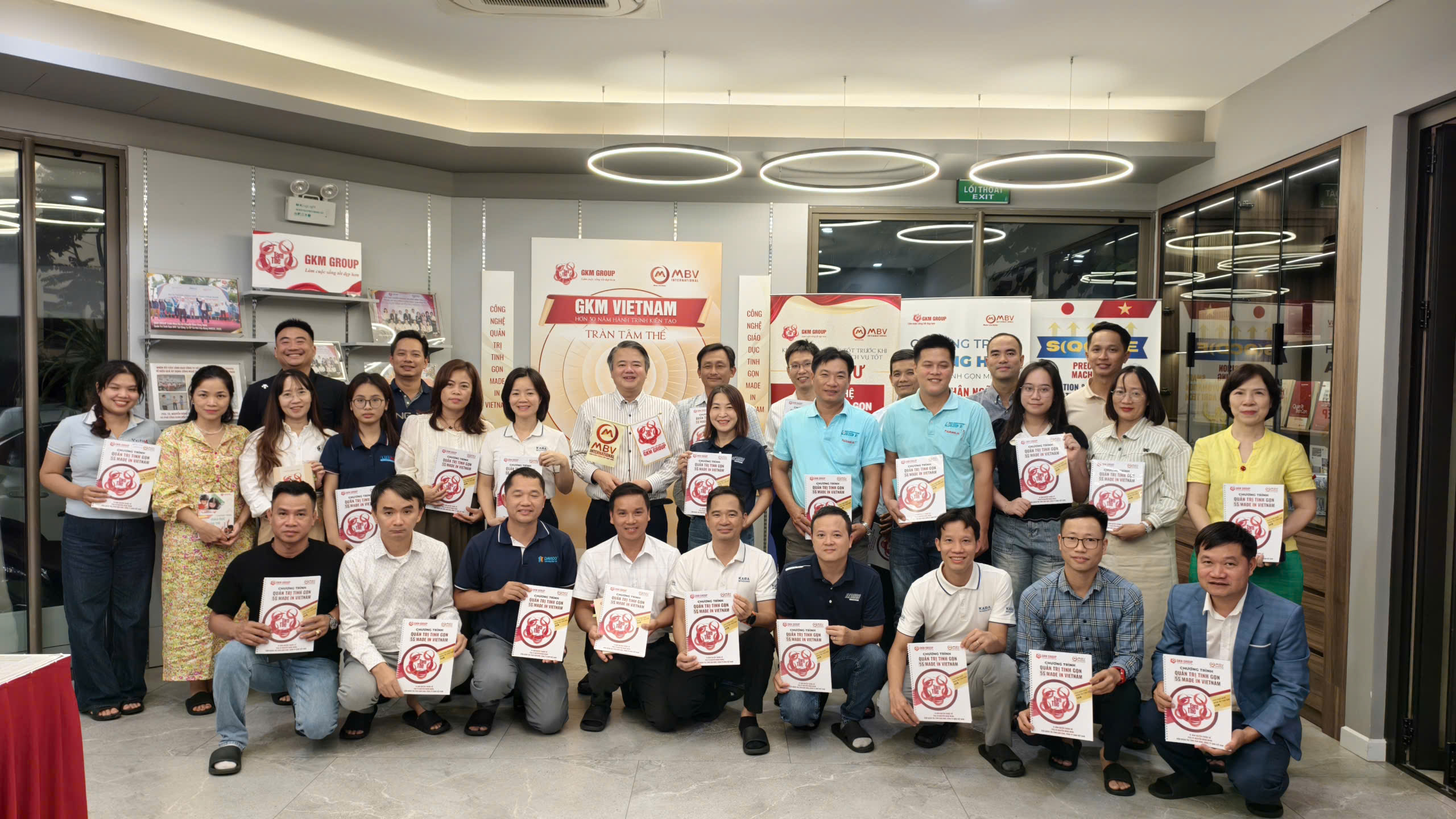
The programme attracted a wide range of senior executives and managers from diverse industries, including mechanical engineering, food and beverage (F&B), construction and healthcare. It brought into focus a pivotal proposition: to move beyond the subcontracting trap and build an independent, self-reliant economy, Vietnamese enterprises cannot rely solely on imported tools, machinery or software. Instead, they need a distinctly Vietnamese Management Gene System.
The event provided an in-depth analysis of the five core values of Lean Management 5S MIV, reaffirming its significance as a management philosophy deeply rooted in Vietnam’s national identity.
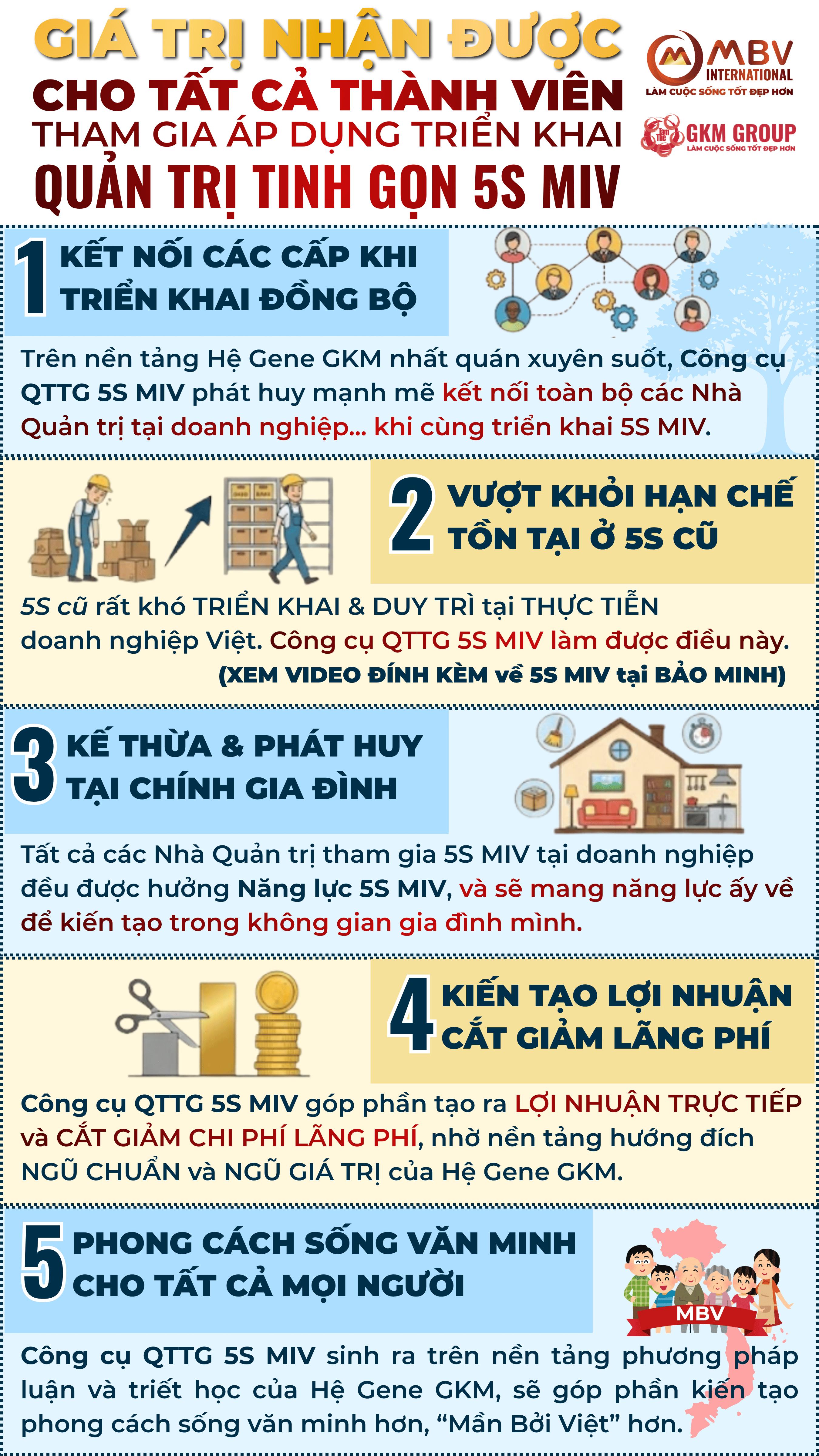
1. Moving Beyond the Limitations of Imported 5S Practices and Placing Tâm Thế at the Root
For many years, Vietnamese enterprises have been familiar with Japan-originated 5S and Kaizen practices. However, their implementation has often become a mere formality and proved difficult to sustain due to the absence of an underlying factor aligned with Vietnam’s local cultural context.
Lean Management 5S MIV addresses this fundamental bottleneck by redefining the implementation structure. The core distinction of 5S MIV lies in its fifth S, “Tâm Thế,” which goes beyond the conventional emphasis on formal discipline and compliance (Shitsuke) in the original 5S framework. Its implementation must begin with S5 (Tâm Thế), cultivating awareness and intrinsic motivation so that individuals voluntarily uphold the other four S principles, recognising 5S as something that directly benefits themselves.
Only when guided by the 13 constituent elements of Tâm Thế can individuals move beyond superficial compliance and develop a genuine commitment to 5S. This transforms orderliness and cleanliness into consistent, sustainable practices across a wide range of environments, from mechanical manufacturing plants to agricultural livestock facilities.
2. Aligning All Organisational Levels and Resolving Conflicts of Interest
One of the most critical bottlenecks facing enterprises is the misalignment of motivations between business owners and employees. From a strategic management perspective, 5S MIV, built upon the foundation of the GKM Gene System, offers a solution to this fundamental challenge.
Through the collective implementation of 5S MIV, the entire organisation achieves alignment in management thinking through the Tâm Thế Gene. This Gene System transforms individuals working in isolation into a cohesive and resilient entity, much like the structure of a diamond. As a result, departmental barriers are dismantled and blame-shifting comes to an end. Every member, from frontline employees to senior leadership, represented by the Roots, Trunk, and Branches and Leaves, is guided to support and complement one another in creating shared value.
3. Generating Profit and Reducing Waste Through Distinctly Vietnamese Lean Thinking
The third core value delivered by the programme addresses a fundamental economic imperative for business survival. Within the framework of Lean Management MIV, the formula Profit = Revenue − Costs is examined at its roots, with Costs encompassing both tangible and intangible forms of waste.
The application of 5S MIV goes beyond cleaning and organising the workplace. Its primary focus is on eliminating these forms of waste. Every improvement, no matter how small, is rigorously measured against the Five Standards (Ngũ Chuẩn). The financial gains from waste elimination flow directly into profits, enabling enterprises to reinvest in technology and improve employees’ quality of life without exhausting their physical and mental capacity.
4. Inheriting and Advancing Values Within the Family Environment
One of the distinctive and deeply humanistic aspects of Lean Management 5S MIV is its ability to extend beyond factory walls. Western management theories often create a divide between professional and private life, whereas the GKM Gene System permeates everyday family life, shaping everything from mealtimes and sleep routines to the way children are raised.
Managers participating in the programme are encouraged to bring their 5S MIV capabilities home and apply them within their own families. The cultivation of harmony and a positive Tâm Thế within the family serves as one of the most powerful driving forces behind productivity in the workplace. This establishes a seamless connection across the Five Values linking the individual * family * company * customer * society, thereby eliminating the conflicts between objectives that are inherent in modern society.
5. Towards a Civilised Way of Life and the Aspiration of “Made by Vietnam”
Ultimately, practising Lean Management 5S MIV is not merely a professional skill; it is a pathway to cultivating a civilised way of life guided by the Five Values.
When every member of society, from farmers to CEOs, understands the philosophy of working in accordance with the Five Standards (Ngũ Chuẩn) and creating the Five Values (Ngũ Giá Trị), we are laying the foundation for a new generation of Vietnamese people. This represents an essential stepping stone for domestic enterprises to confidently develop products and services embodying the spirit of Made by Vietnam (MBV). It is a declaration of self-reliance and resilience, transcending the boundaries between “you” and “me” to embrace a shared sense of “we”, united by the aspiration to reach the global stage through our own capabilities.
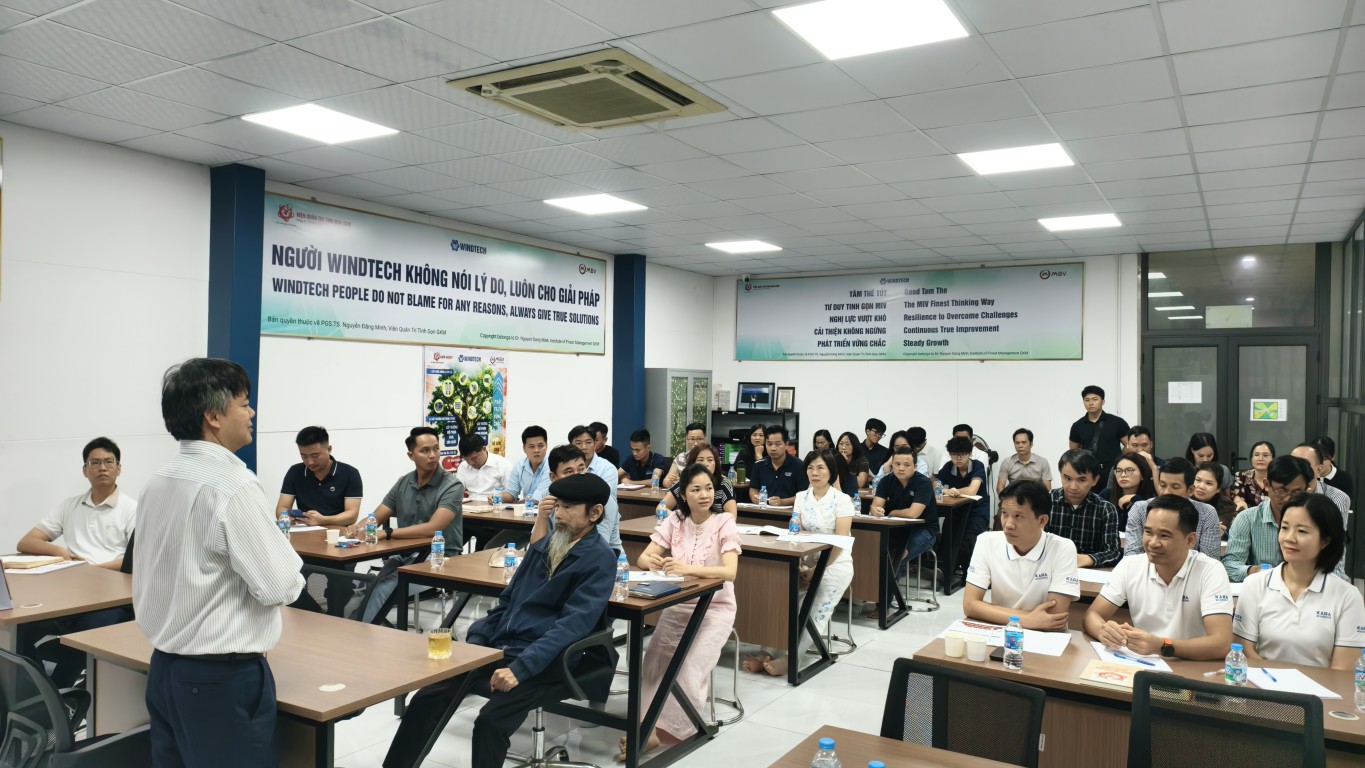
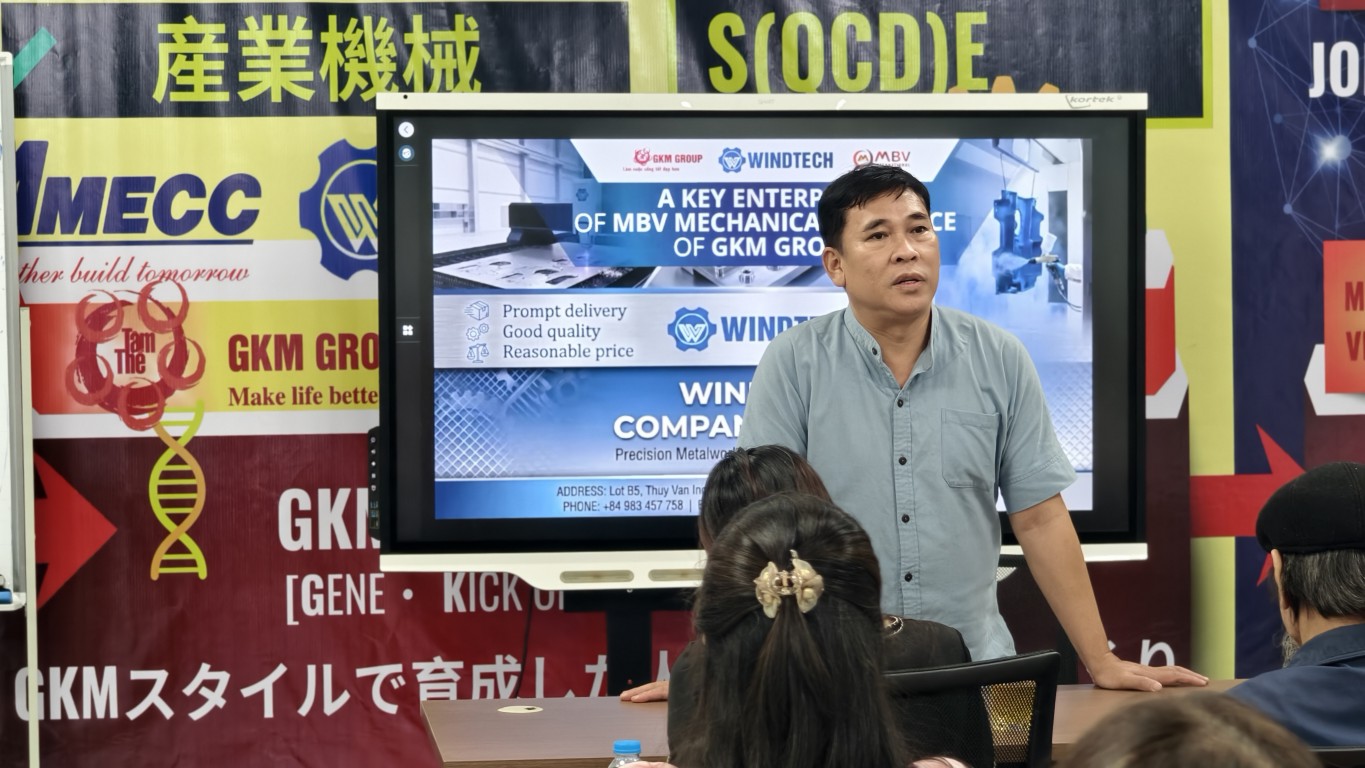
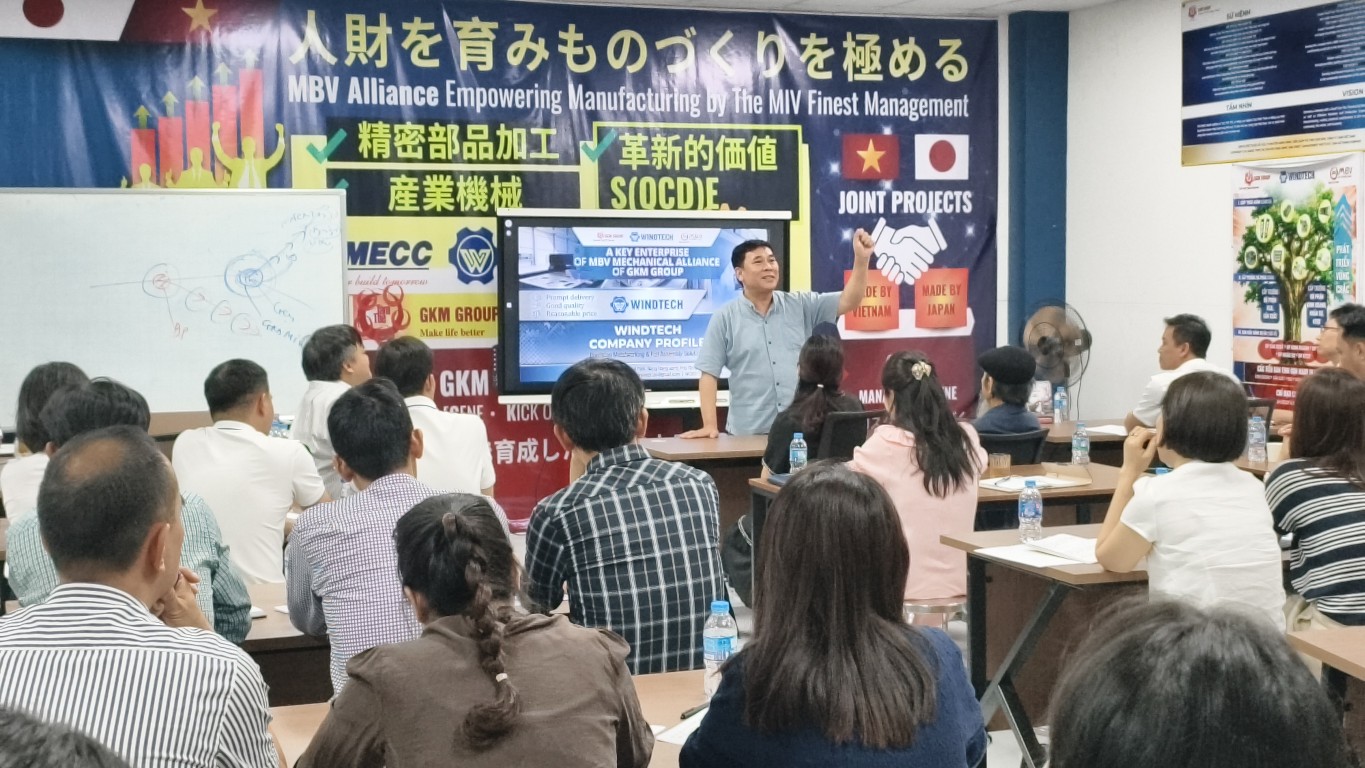
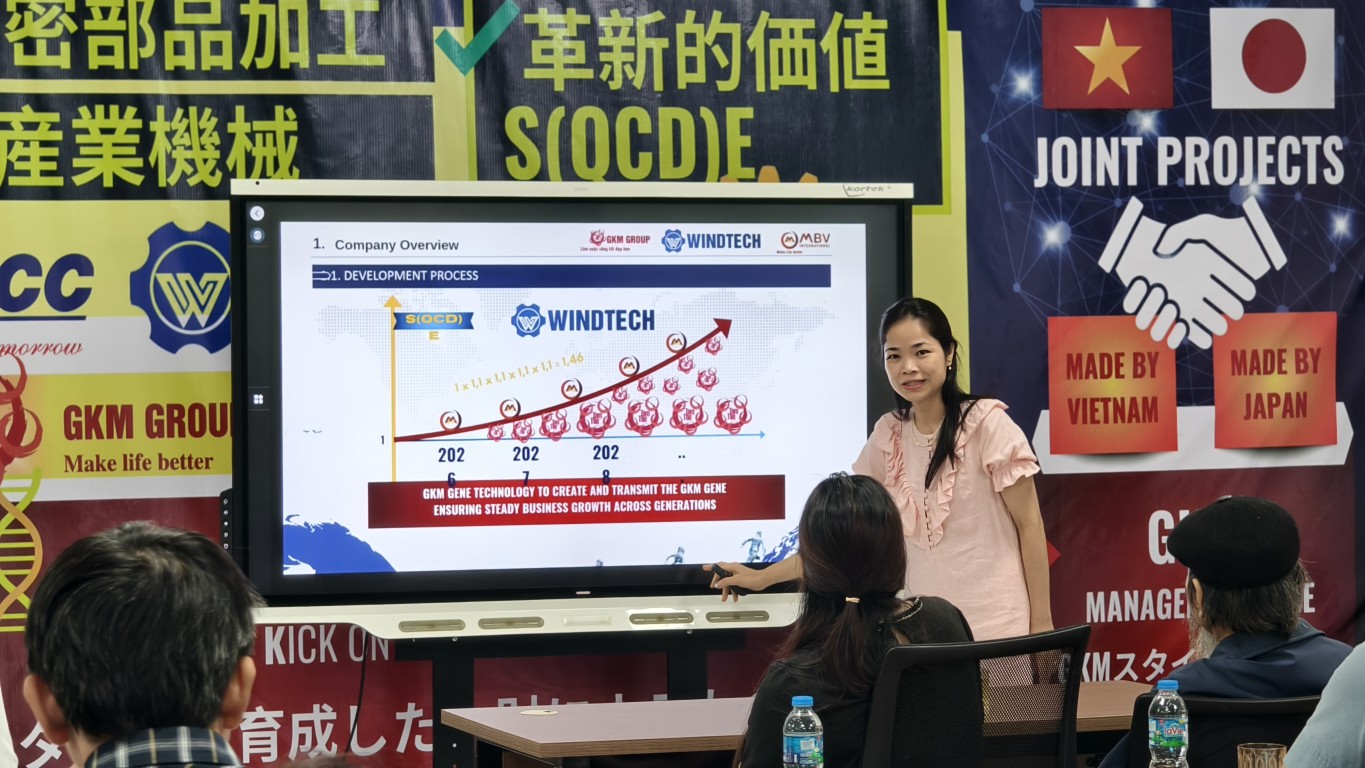
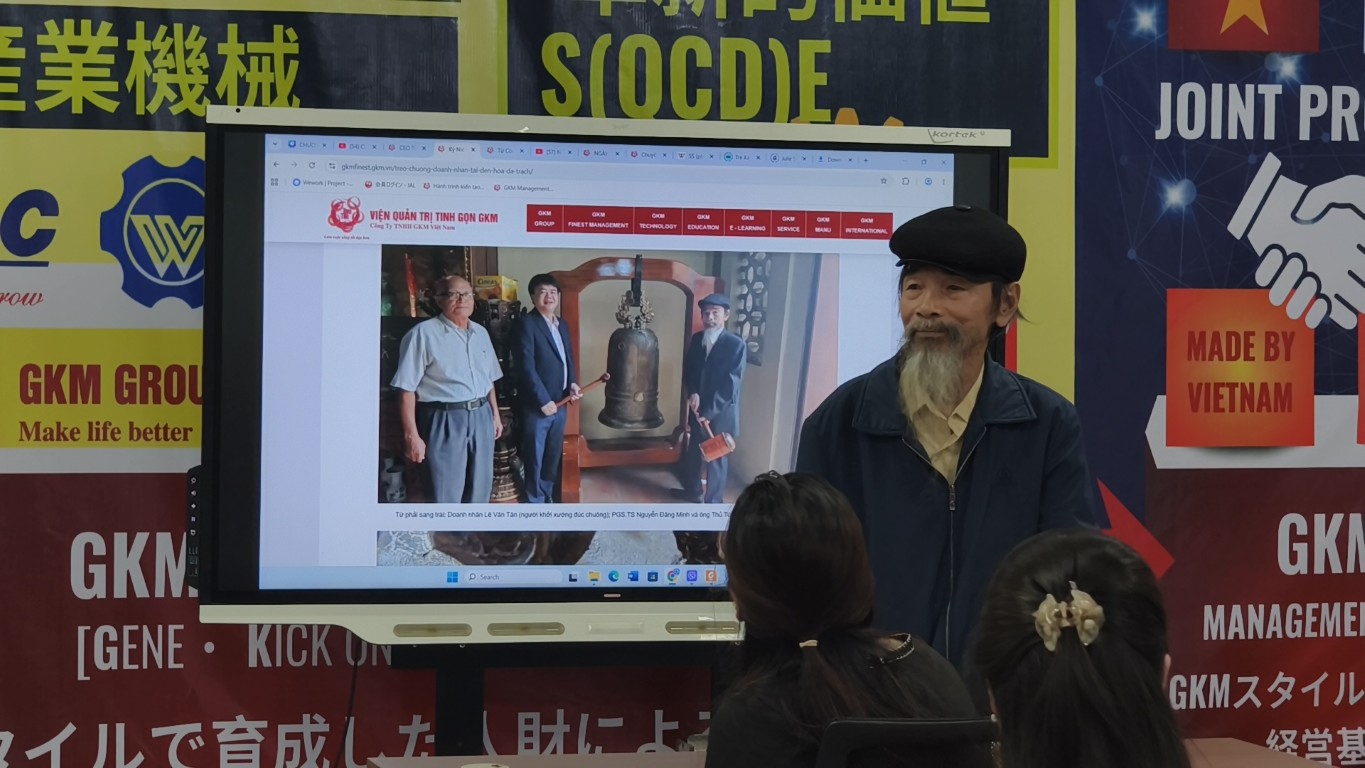
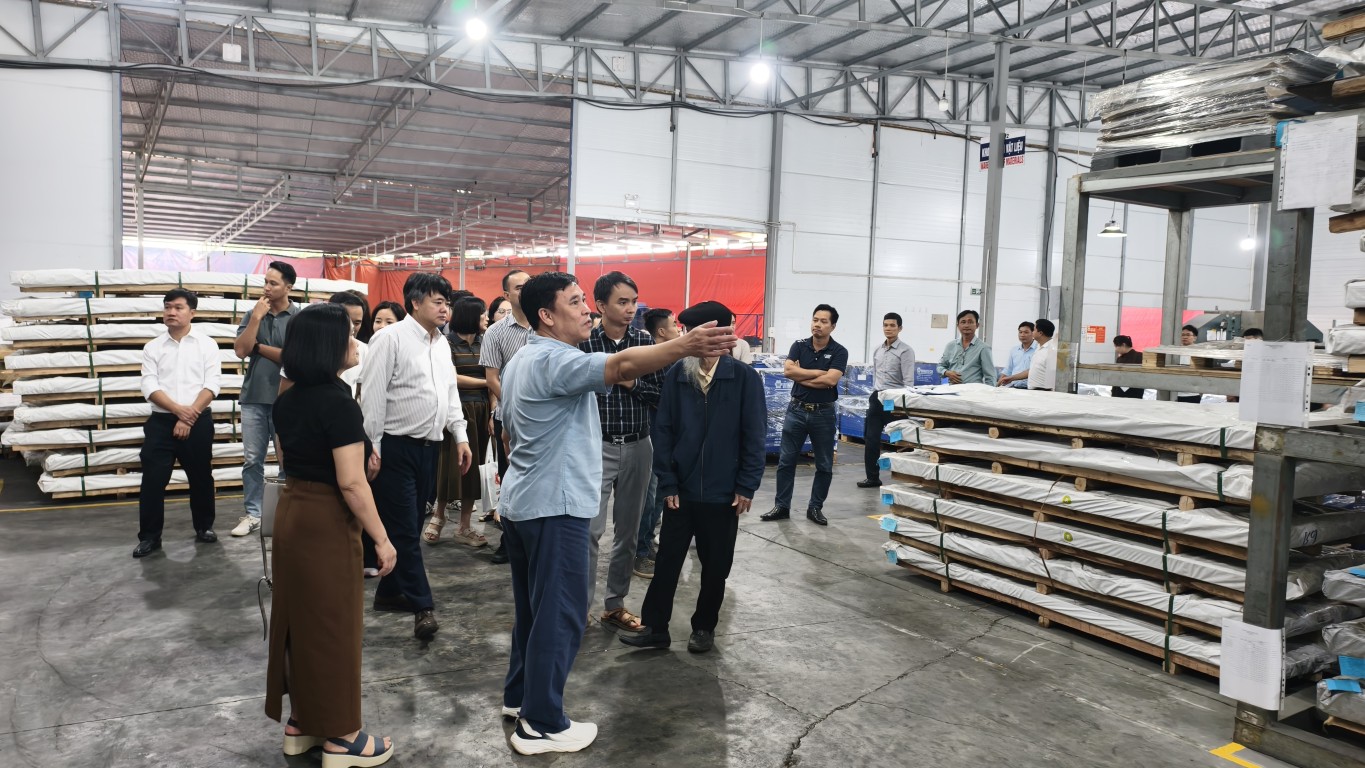
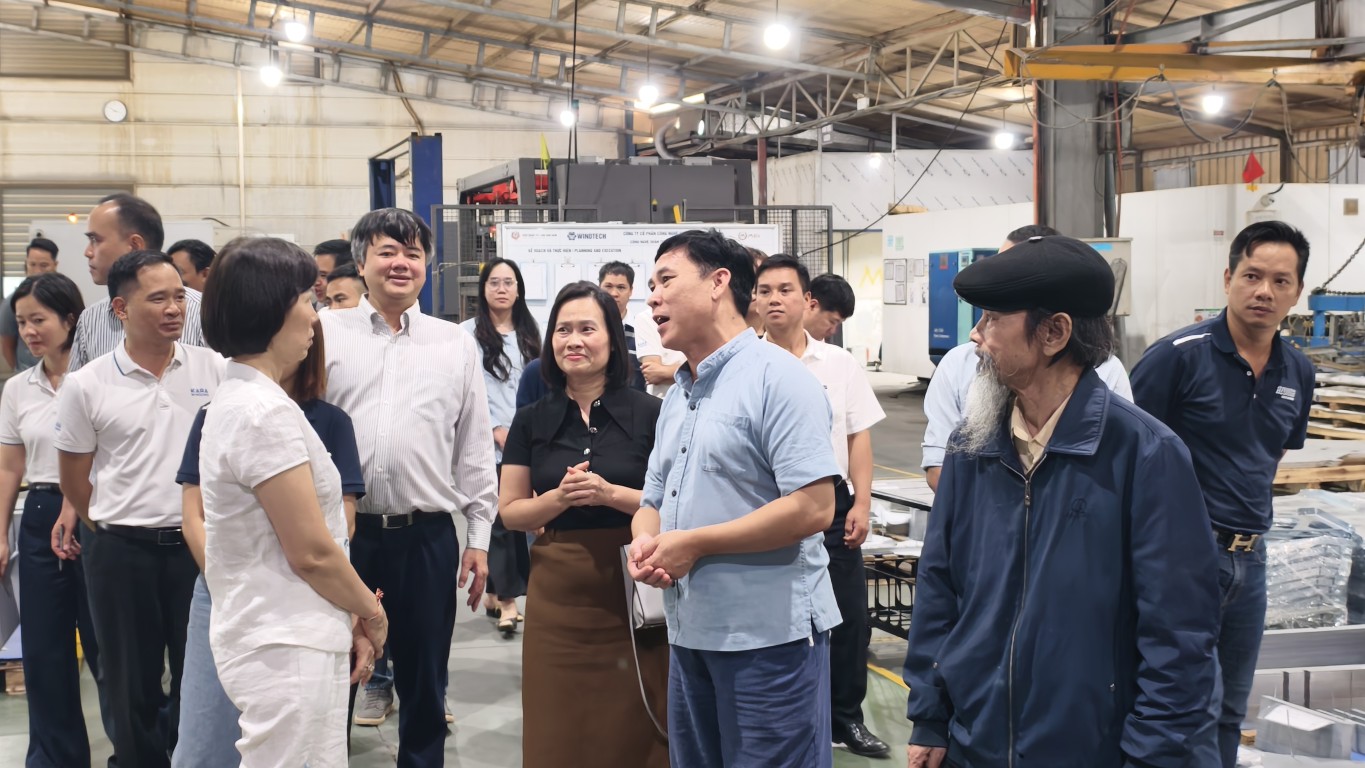
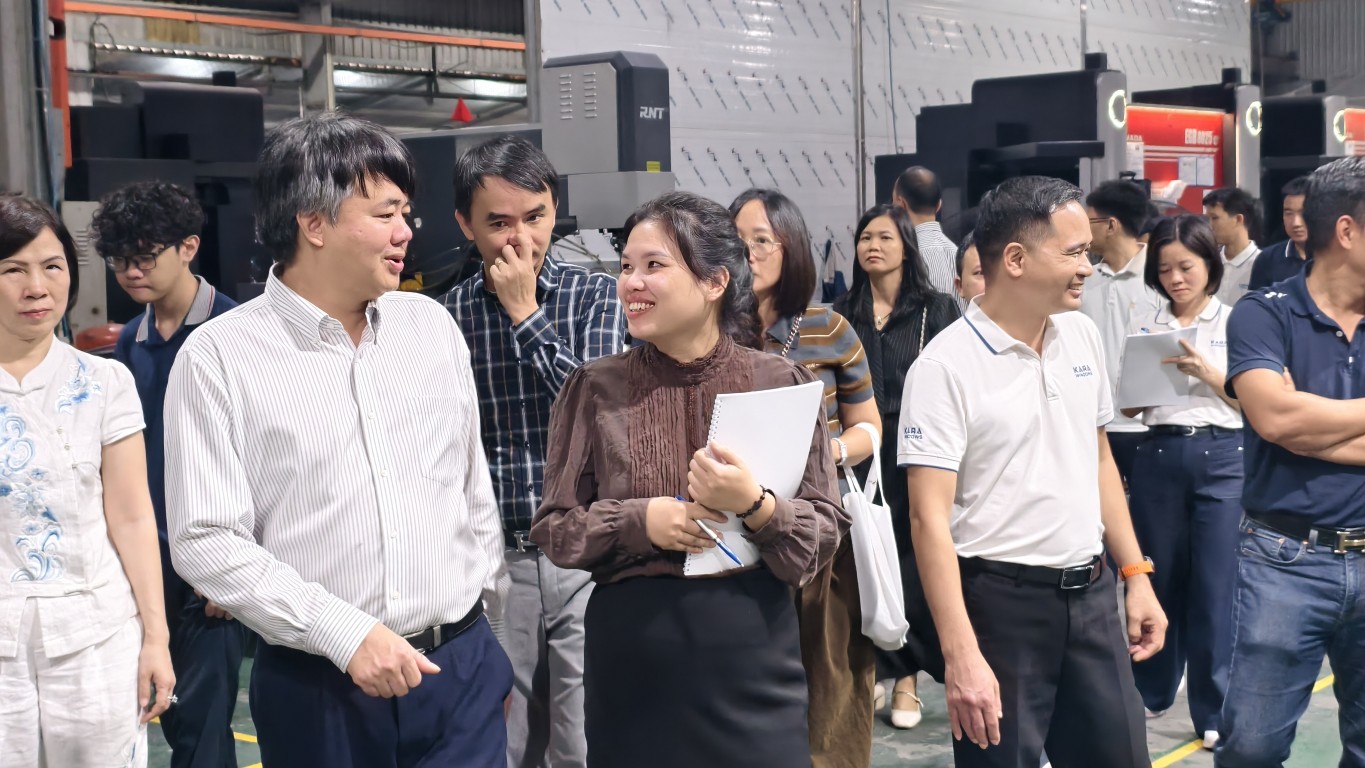
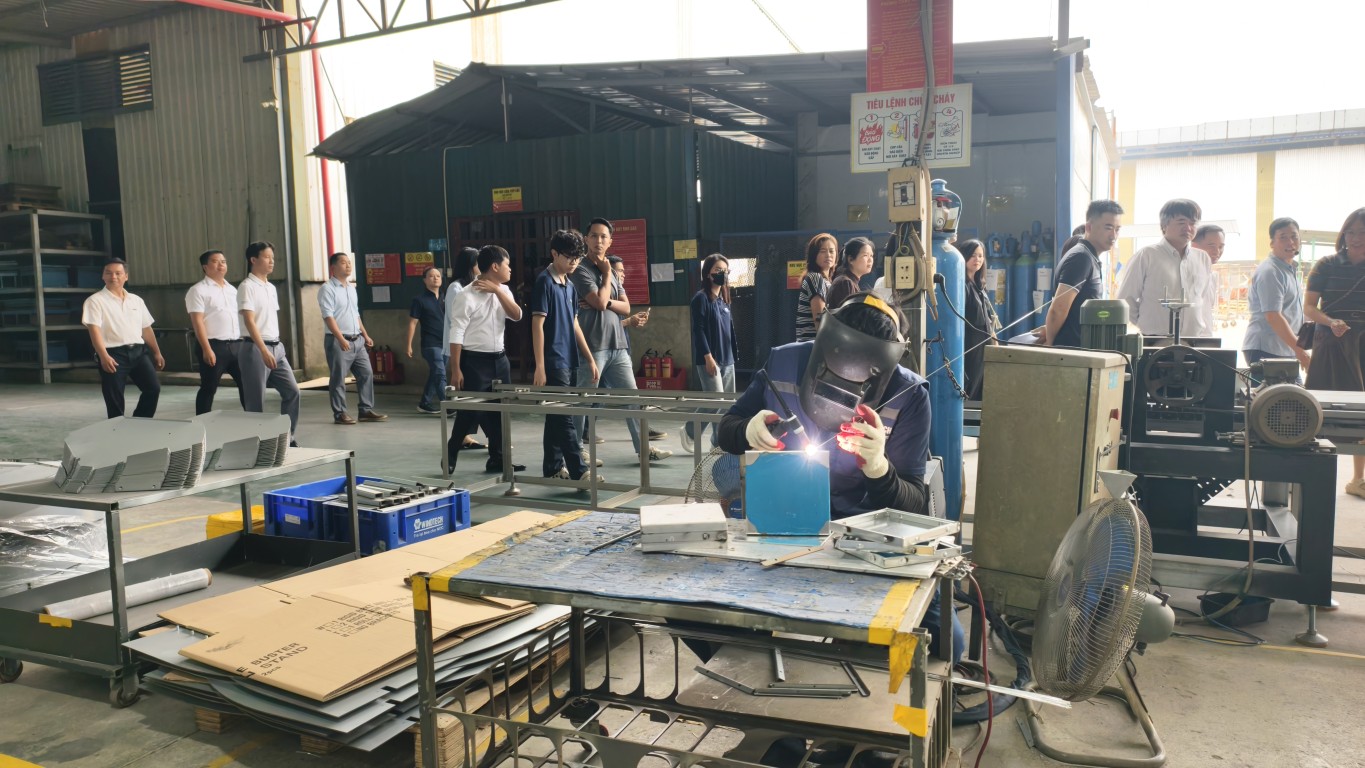
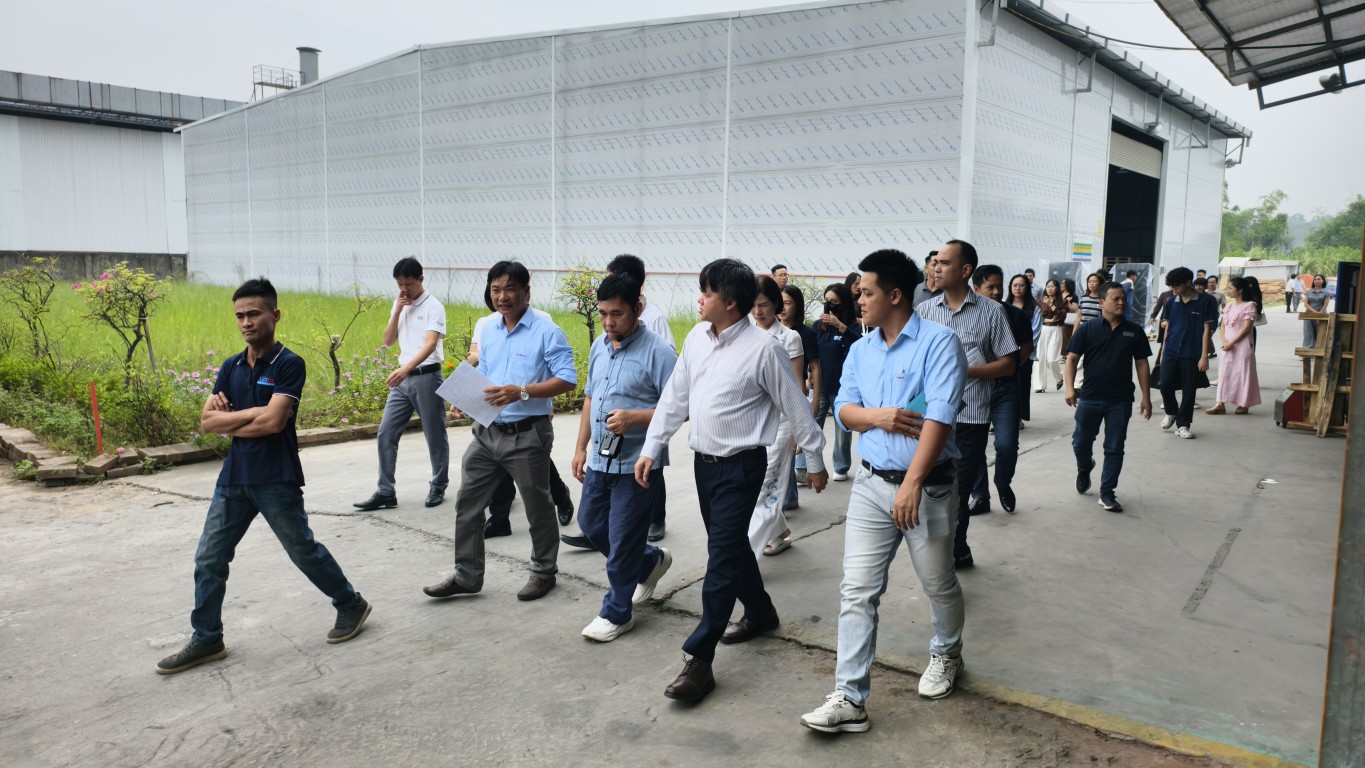
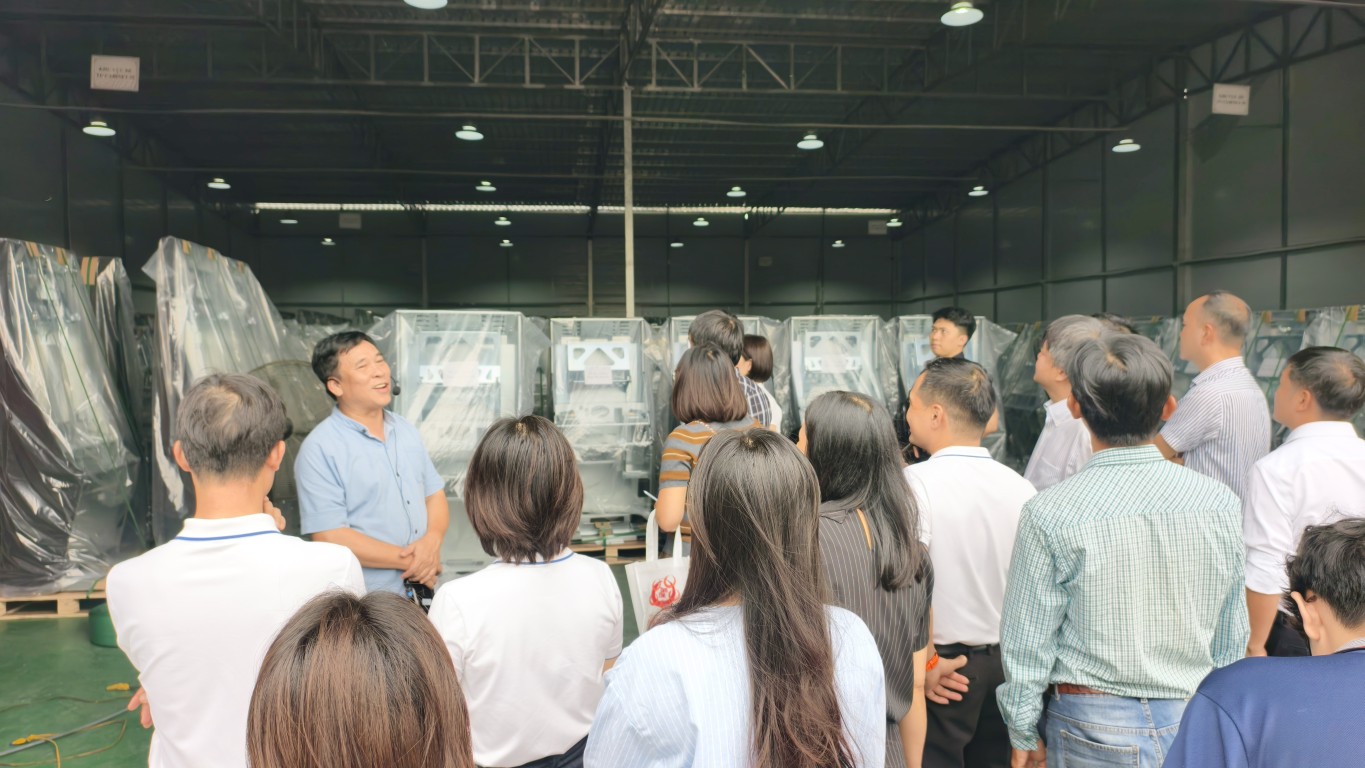
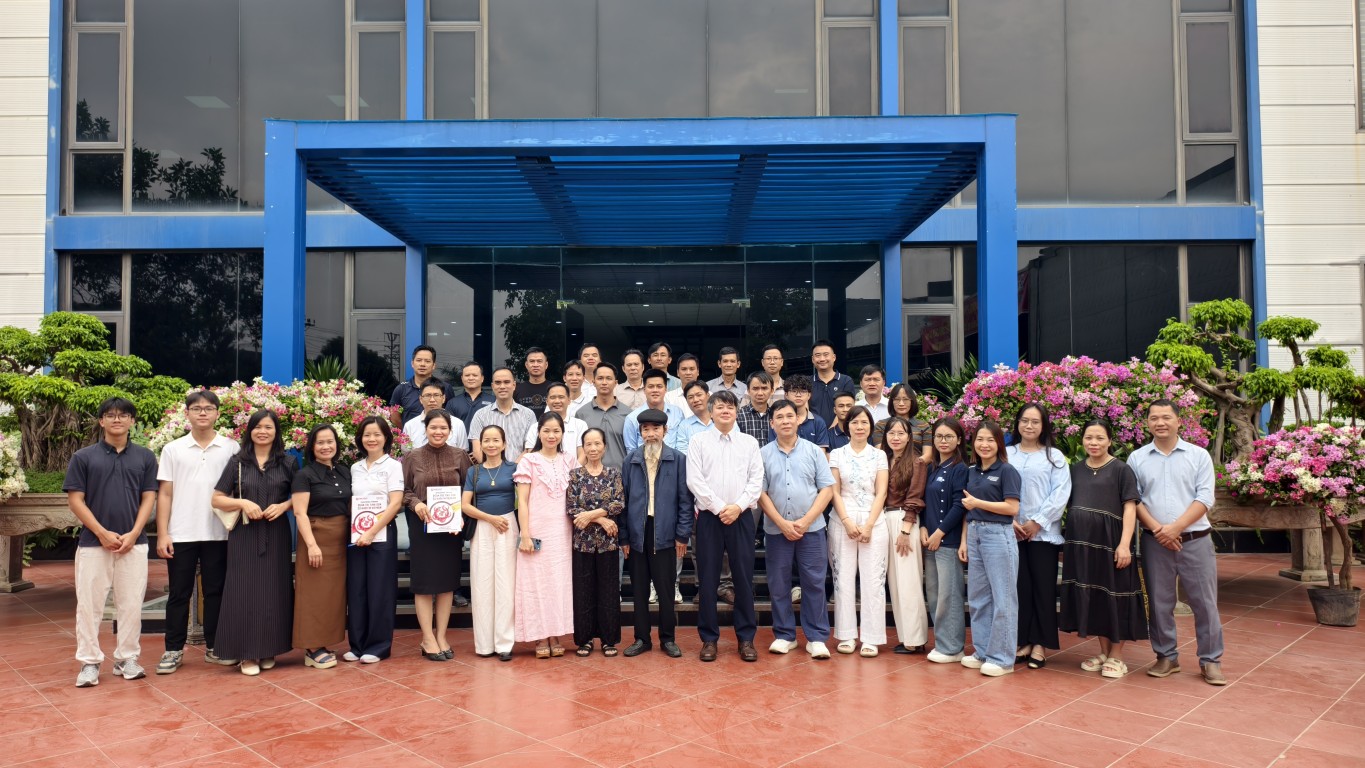
At the conclusion of the programme, the profound “touchpoints” and moments of realisation (aha moments) experienced by participating business leaders highlighted a fundamental shift in perspective. GKM’s philosophy was no longer merely a set of theories on paper; it had taken root and brought a renewed sense of energy to the participating enterprises.
Turning the “Pyramid” Upside Down and Aspiring to Self-Reliance
The most significant insight shared by participants was the need to break away from the mechanical and superficial implementation of imported models, where practices are adopted merely to comply with inspections. Leaders came to realise that even the most sophisticated tools are meaningless without Tâm Thế. This is the foundation upon which employees understand that Sàng lọc, Sắp xếp and Sạch sẽ (Sort, Set in Order and Shine) first and foremost benefit themselves and their families, before benefiting the company.
Building on this foundation, a fundamental break with conventional management thinking began to take place. The traditional pyramid-style leadership model, in which those at the top exert authority over those below, gave way to the “Inverted Pyramid” approach. Under this model, leaders serve as the firm “Roots”, providing support, nourishment and mutual backing (bọc lót) to the teams responsible for execution, represented by the Trunk, Branches and Leaves. This mutual support helps eliminate a culture of blame, strengthen employees’ capabilities and gradually free leaders from day-to-day micromanagement.
More importantly, GKM’s philosophy has rekindled national pride. Rather than looking outwards and relying on foreign experts or imported models, business leaders have found the “right path” towards strengthening their own internal capabilities. This has given them the confidence to develop Made in Vietnam products and services, with the ambition to compete on equal terms in the global marketplace.
Real-World Stories of Philosophy Put into Practice
GKM’s management philosophy was swiftly translated into tangible changes across factory floors and individual workstations.
At Milana, Ms Thụy Khanh realised that no matter how advanced the machinery might be, business owners must take responsibility for “developing people” themselves, rather than endlessly searching for perfect employees from outside. This transformation went hand in hand with a firm commitment to using 100% genuine Vietnamese agricultural produce, including Cát Chu mangoes and Hanoi green rice flakes (cốm), to bring the company’s Gelato ice cream range to international export markets.
At Karawindows, represented by Mr Tùng, Mr Thi and Ms Thúy, the company had previously received direct training from experts from the Japan International Cooperation Agency (JICA) and invested heavily in building its corporate culture. Yet progress remained stalled as employees continued to resist change. The breakthrough came only when the leadership decided to undertake a comprehensive transformation, starting with themselves. Ms Thúy, who oversees financial management, immediately took a hands-on approach by going into the warehouse to review and clear accumulated inventory worth VND 15–20 billion. She upheld the principle that “legacy assets must be handled meticulously” while also applying Lean Management 5S Made in Vietnam to bring order to her own home.
At Farmila, represented by Mr Phong and Mr Huy, the team moved away from the old practice of “putting up countless red tags while leaving the waste untouched”. By understanding the true essence of 5S MIV, they shifted their focus towards eliminating tangible forms of waste, fostering self-discipline and developing an excellent team.
The experience of Đại Việt and Kiên An, represented by Mr Nghĩa and Ms Phú, demonstrated the power of aligning management thinking (Đồng Gene) among business owners. This shared foundation fuelled their ambition to prove that Vietnamese mechanical engineering products are fully capable of competing with international counterparts.
For Ms Thu Diệu and Mr Thông at Ychi Vietnam, relief from the pressures of management began with a change in awareness. Leadership must start with trust, combined with the disciplined execution of even the smallest tasks, or “chút chít”, to bring about gradual improvements across the entire enterprise.
The “Learn * Understand * Apply” Spirit Builds a Community of Mutual Support
The programme did not conclude with abstract academic theories. Instead, it generated a renewed sense of purpose and momentum. All participants committed to taking action under the guiding principle of “Learn * Understand * Apply”, recognising that each enterprise is itself a “practical university” where knowledge must be translated into tangible results.
They pledged to report their implementation results transparently and remain willing to share not only their successes but also their setbacks, so that they could support and learn from one another. These commitments form the strongest foundations for building an ecosystem of Vietnamese enterprises that are self-reliant, connected and capable of unlimited growth in the new era.
Concluding Remarks
The success of the “Lean Management 5S MADE IN VIETNAM” programme once again demonstrates that the first foundation for a nation’s sustainable development must be the Tâm Thế of its people. The programme went far beyond the scope of a skills training course, becoming a small-scale revolution in management thinking. It has equipped Vietnamese entrepreneurs with a “passport of capability”, preparing them to step confidently into the era of national advancement.